
How to Price Draft Beer (Profit Per Keg, Not Per Pint)
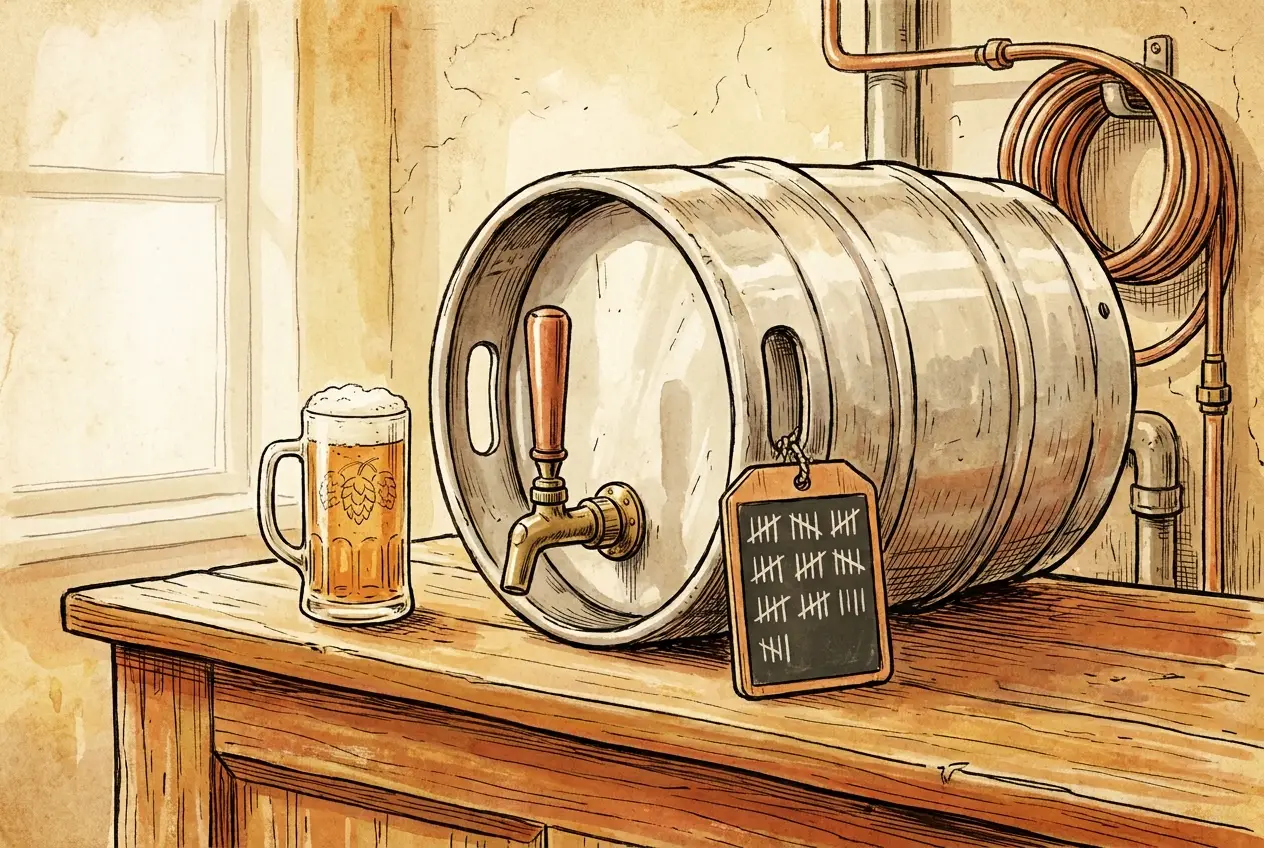

I priced my first craft draft straight off the keg invoice. Took the cost, divided by what the box said the keg held, set a price, felt good about it. The margin never showed up at the end of the month. I had priced against the theoretical pint count, not the one we actually served. Foam, line cleaning, the first cloudy pour off a fresh keg, all of it came out of a number I never put in. Here is how to price draft so the profit actually lands.
The short answer #
Price draft beer to a 20 to 22% pour cost. A $180 half-barrel that pours roughly 115 servable pints needs about a $7 pint and nets around $600 in profit per keg. The mistake is pricing off the theoretical pint count instead of the servable one, which inflates your margin on paper and shorts it in real life.
Start with real servable pints, not the box number #
A half-barrel keg is 15.5 gallons, which is 124 sixteen-ounce pints in theory. You will not serve 124. Foam, line cleaning, the first pour off a fresh tap, the foam at the bottom of the keg. You lose 5 to 10% before a guest ever pays for it. Real servable pints land around 110 to 118 on a well-run system, lower if your lines run long or your glassware comes out warm.
So the math starts at 115 servable pints from a half-barrel, not 124. That one correction is the whole difference between the margin you planned and the margin you got. The full breakdown of where the beer goes is in half-barrel pints and foam loss.
The pricing formula #
Price to your target pour cost off the real cost per servable pint.
Cost per pint = Keg cost / Servable pints
Pint price = Cost per pint / Target pour cost %
A worked example #
A craft half-barrel costs you $180. Servable pints, 115. Target pour cost, 22%.
- Cost per pint: $180 / 115 = $1.57
- Pint price: $1.57 / 0.22 = $7.13, round to $7
- Profit per keg: (115 x $7) - $180 = $805 - $180 = $625
At a $7 pint you are running a 22.4% pour cost and netting $625 on the keg. Drop the price to $6 to compete with the bar down the street and watch what happens: revenue is 115 x $6 = $690, profit is $510, and your pour cost jumps to 26%. That one dollar costs you $115 in profit per keg, every keg, all year.
Glass size is part of the price #
A “pint” in a lot of bars is not 16 ounces. The cheater pint, that 14-ounce glass that looks like a pint, changes everything. Pour 14 and charge pint prices and your servable count goes up and your margin with it, but now you are also lying to the guest a little. Pour an honest 16 and your count is lower and your price has to match. Pick one. Spec the glassware, and price against the glass you actually pour, not the one printed on the menu.
Profit per pint is the wrong lens #
Think in profit per keg, not profit per pint, because the keg is the unit you buy and the unit you tie up cash in.
A pint that “makes $5” tells you nothing about whether the keg cleared. A keg that nets $625 and sells through in a week is a great line. A keg that nets $625 and takes a month to blow is dead money sitting in your cooler. That is the part nobody feels until the cash is stuck. Price for margin, then watch velocity, and pull the lines that do not move.
What this looks like in the calculator #
The keg cost calculator on this site runs cost per pint off real servable pints, prices to your target pour cost, and gives you the profit per keg at any price. You can see exactly what a dollar on the menu does to the keg. Run your draft list through it and you will probably find one or two lines you have been underpricing.
What to do today #
Take your three best-selling drafts. Pull the real keg cost off your last invoice, and price each one off 115 servable pints to a 22% pour cost. Compare that to what you actually charge. If you are under, you are leaving margin on every keg. If you are way over, your velocity is probably hurting for it. Set the price to the math, then watch which lines move.
Sources: Backbar, How to Price Draft and Bottled Beer, BinWise, Bar Profitability Guide, Brewers Association, Kegerator.com.
Read next
What's a Good Prime Cost for a Bar vs a Restaurant?
A healthy prime cost by concept, how to calculate it weekly with fully loaded labor, and which half to fix when it runs hot. From a 5-year GM.
How to Price a Cocktail (The Pour Cost Math Bars Skip)
How to price a cocktail off its real pour cost, the multiplier that works, and a worked build from spirit to menu price. From a 5-year bar GM.