
How to Price a Cocktail (The Pour Cost Math Bars Skip)
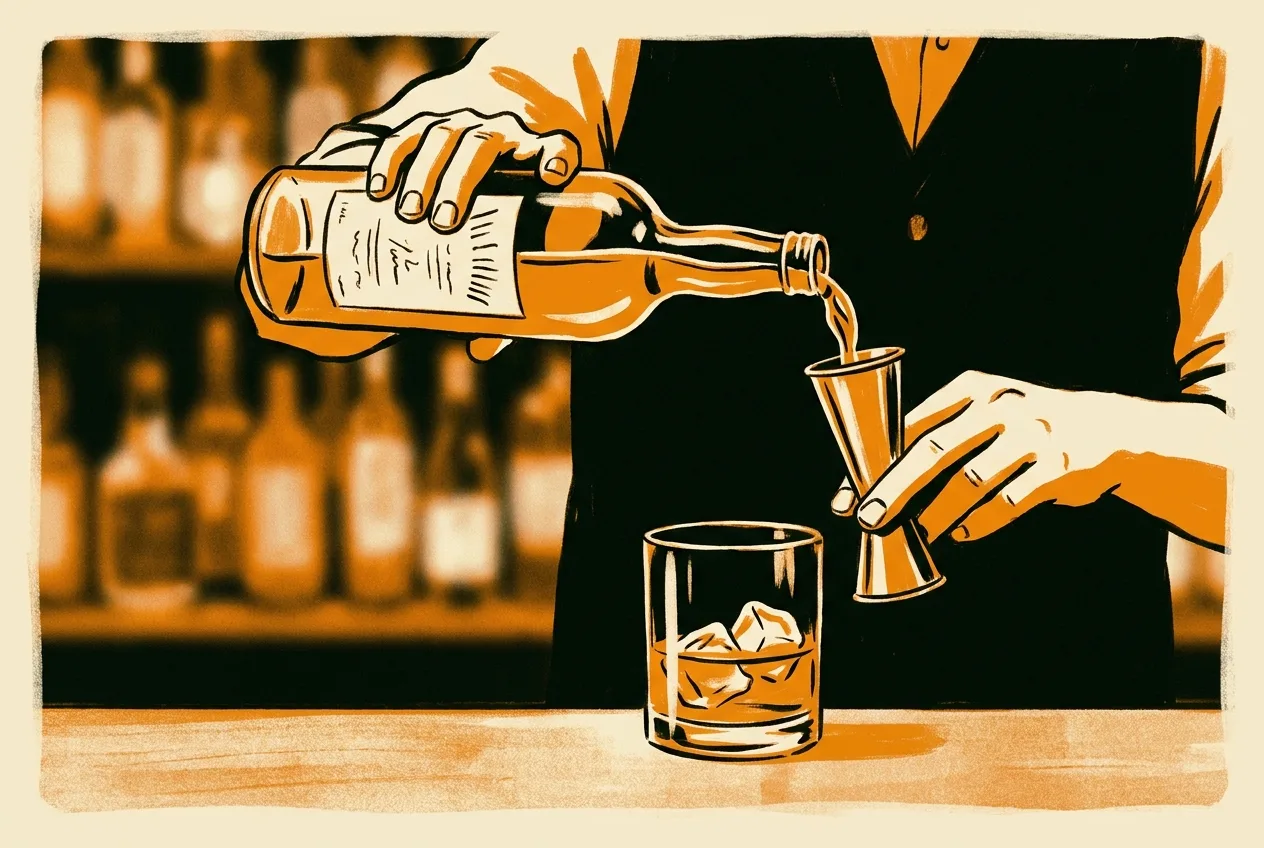

Most bars price cocktails by feel. They look at what the bar down the street charges, pick a number that sounds about right, and move on. That works fine for a vodka soda. It quietly bleeds you on anything with more than two ingredients, because the build cost of a real cocktail does not show up on the menu and nobody is doing the math behind the well. So the fancy drinks, the ones you are proud of, end up being the cheap ones. Here is how to price a drink off what it actually costs to make.
The short answer #
Price a cocktail at 4.5 to 5.5 times its pour cost, which targets an 18 to 22% pour cost. A build that costs you about $2.50 sells in the $12 to $14 range. The trap is using one flat multiplier across the whole menu, because a spirit-forward drink and a modifier-heavy drink do not cost the same to make.
Cost the whole build, not just the spirit #
A cocktail is not one pour. Cost every line in the glass:
- Base spirit: the main pour, usually 2 oz
- Modifiers: liqueurs, vermouth, amaro, often the hidden cost
- Juice and syrups: cheap per drink but real
- Garnish: a dehydrated wheel or an expensive twist adds up
- Ice and dilution: not a cost, but it affects the pour spec
The modifiers are where it sneaks up on you. A drink with a half-ounce of a $40 amaro and a quarter-ounce of a $35 liqueur can cost more in modifiers than it does in base spirit. You look at the tequila and think you priced it right. You never looked at the two little pours that doubled the build. Price off the total, not the headline pour.
The formula #
Cocktail price = Total build cost / Target pour cost %
A worked example: a margarita #
- Tequila, 2 oz at $1.18/oz ($30 bottle, 25.4 oz per 750mL) = $2.36
- Triple sec, 0.75 oz at $0.40/oz = $0.30
- Lime juice, 1 oz = $0.20
- Agave, 0.5 oz = $0.15
- Salt rim and lime wheel = $0.10
- Total build cost: $3.11
At a 20% target pour cost: $3.11 / 0.20 = $15.55, round to $15 or $16.
Now here is the part that should bug you. If you had priced that margarita at $11 because “margaritas are $11,” you would be running a 28% pour cost and handing back four dollars a drink. One drink, who cares. Stack it across a busy Friday, two hundred margaritas, and it adds up fast.
Real money, out the door in a glass. You funded it yourself, every shift, and never once saw it on a report.
Why one flat multiplier fails #
A 5x multiplier on a $1.60 well drink gets you $8, which is fine. The same 5x on a $4 build of premium spirits and house syrups gets you $20, which the market may not bear, so you cap it at $16 and quietly run a 25% pour cost on your best cocktail. Meanwhile the well drink could carry a higher multiplier than 5x and nobody would blink.
So price each drink to its target pour cost instead, not to a single number you slap on everything. The cheap drinks can carry a fatter margin. The expensive builds need a higher menu price or a tighter spec. Lump them together under one multiplier and your fanciest cocktail becomes your worst margin, which is exactly backwards. For how to measure pour cost in the first place, see how to calculate pour cost.
Land on a price the menu can hold #
Once the math gives you a number, set the actual menu price with a little psychology. A $15.55 cost-based price usually goes on the menu at $15 or $16, and the research on charm pricing says the dollar-down version often reads better. That is a separate decision from the cost math, and it is covered in charm pricing vs round pricing. Do the cost math first. Then round to a number that sells.
What this looks like in the calculator #
The liquor pour cost calculator on this site runs per-drink cost line by line and prices to your target pour cost, so you can build a cocktail in it and watch the menu price fall out. Pair it with the menu pricing calculator for the rounding and you have the whole drink priced in a couple minutes.
What to do today #
Take your three most complex cocktails, the ones with the longest ingredient list, and cost the full build line by line. Compare the 20% pour cost price to what you actually charge. Those are your underpriced drinks, almost every time, because the modifier cost hides from a feel-based price. Reprice those. Leave the simple drinks alone.
Sources: Backbar, How to Set Cocktail Prices, BinWise, Alcohol Pricing, Jeffrey Morgenthaler, How to Price a Cocktail Menu, Sculpture Hospitality, Cocktail Costing Formula.
Read next
What's a Good Prime Cost for a Bar vs a Restaurant?
A healthy prime cost by concept, how to calculate it weekly with fully loaded labor, and which half to fix when it runs hot. From a 5-year GM.
How to Price Draft Beer (Profit Per Keg, Not Per Pint)
How to price draft beer to a target pour cost, the real servable pints after foam, and the profit-per-keg number that matters. From a 5-year bar GM.